
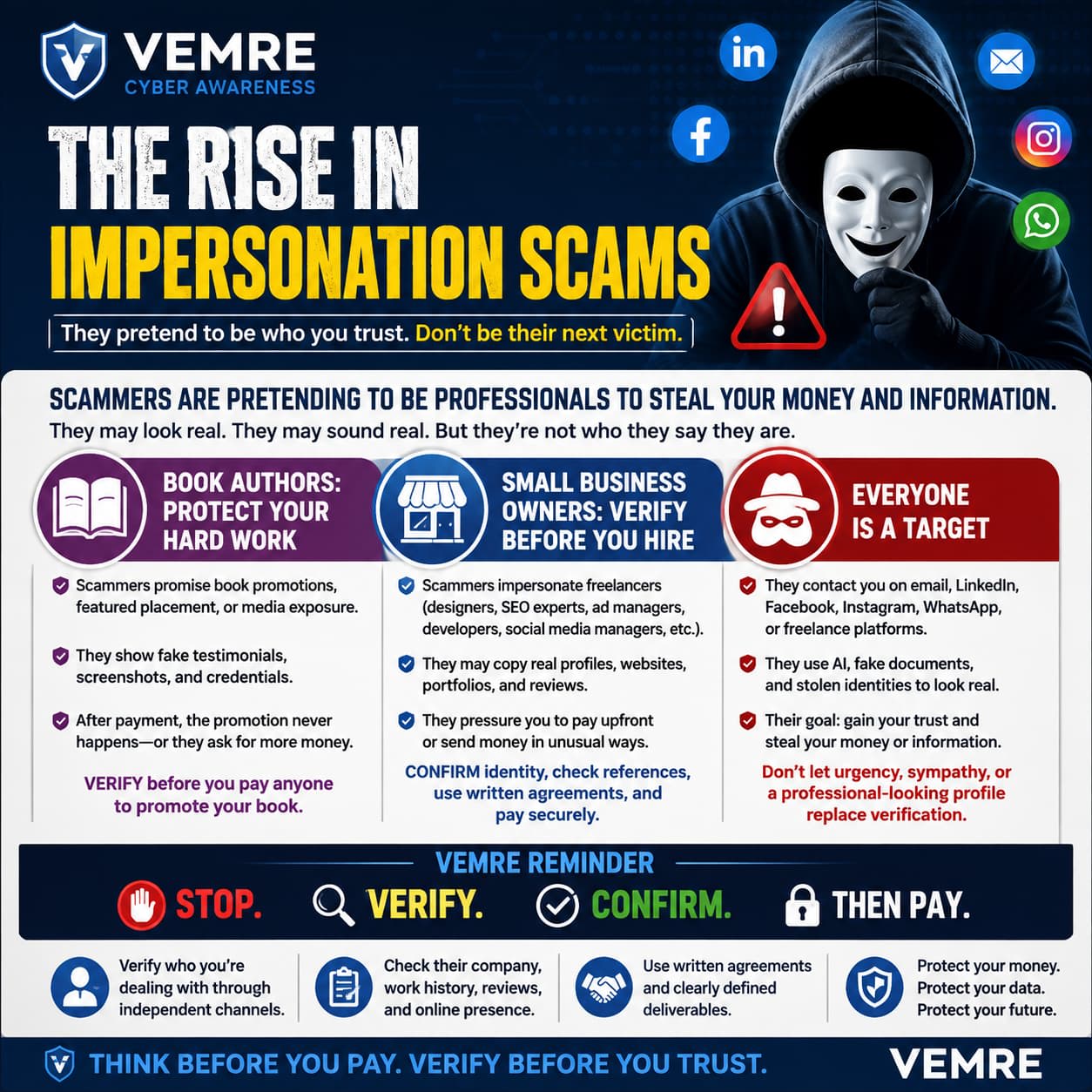
The Rise of Impersonation Scams: When Scammers Pretend to Be the Person You Trust
Impersonation scams are becoming increasingly sophisticated. Scammers can pretend to be marketing professionals, publishers, book promoters, freelancers, social-media managers, SEO specialists, graphic designers, recruiters, or even representatives of legitimate companies. They may contact victims through email, LinkedIn, Facebook, Instagram, WhatsApp, or freelance platforms and offer services that sound legitimate—such as promoting a book, designing a flyer, managing social media, running SEO campaigns, or advertising a small business. Their goal is often to gain your trust and convince you to send money or sensitive information.
📚 Book Authors: Be Careful Who Promises to Promote Your Book
Independent authors are increasingly approached by people claiming they can get their books featured by major publishers, influencers, bookstores, media outlets, or large audiences. The scammer may provide impressive testimonials, fake success stories, fabricated publishing credentials, or screenshots showing supposedly successful campaigns. After receiving payment, the promised promotion may never happen—or the scammer may continue requesting additional payments for "advertising," "distribution," "featured placement," or "processing fees." Before paying anyone to promote your book, independently verify their company, previous work, clients, website, social-media presence, and the exact services included in the agreement.
💼 Small Business Owners: Verify Freelancers Before You Pay
Small businesses are also attractive targets because owners frequently outsource services such as flyer design, website development, SEO, Google/Microsoft advertising, social-media management, video production, bookkeeping, and digital marketing. An impersonator may copy a legitimate freelancer's name, portfolio, profile photo, or business information and then contact you pretending to be that person. They may even use AI to create professional proposals and convincing conversations. Don't assume that a professional portfolio or social-media profile proves someone's identity. Contact the freelancer through an independently verified channel, confirm ownership of the portfolio, use a written service agreement, clearly define deliverables, and be cautious about unusual payment requests or pressure to pay immediately.
🚨 VEMRE REMINDER: VERIFY BEFORE YOU PAY
Whether you're an author looking for book promotion, a business owner hiring an SEO specialist, or someone simply purchasing an online service, slow down before sending money. Verify who you're dealing with, what you're paying for, where the person works, whether the advertised service actually exists, and how disputes or refunds will be handled. Never allow urgency, impressive testimonials, or a professional-looking profile to replace independent verification.
The person behind the profile may not be the person behind the service.
STOP. VERIFY. CONFIRM. THEN PAY.
Vemre Cyber Awareness | Think Before You Pay. Verify Before You Trust.
Comments
Be the first to comment.
Leave a Comment