
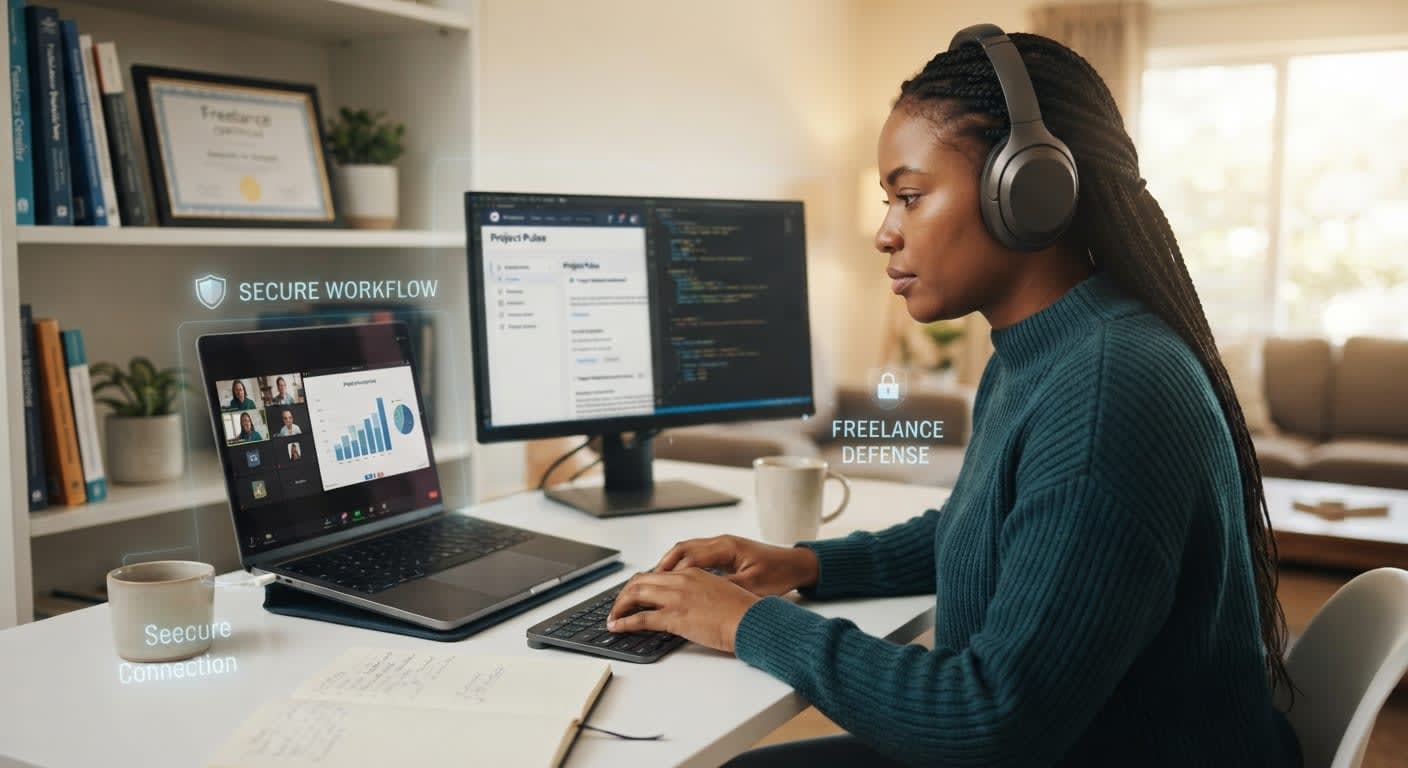
For millions of independent contractors, digital nomads, and solo consultants, the greatest perk of freelancing is autonomy. You choose your clients, set your hours, and build your own business from a laptop anywhere in the world.
However, that same autonomy creates a unique vulnerability. Unlike enterprise corporations backed by dedicated Security Operations Centers (SOCs) and 24/7 IT helpdesks, freelancers are a "team of one." You are your own CEO, project manager, chief financial officer—and sole IT security department.
Cybercriminals know this. They recognize that independent professionals often manage multiple client credentials, sensitive intellectual property, and financial accounts on a single personal device. This makes freelancers lucrative targets for spear-phishing, malware-laced client files, and sophisticated social engineering attacks.
Securing your solo business doesn’t require a massive corporate budget. Here is an essential cybersecurity playbook tailored specifically for independent freelancers.
1. Treat Your Personal Laptop Like Corporate Infrastructure
Most freelancers use the same device for checking personal emails, streaming movies, downloading open-source software, and handling client work. This blending of personal and professional habits opens the door to severe security risks.
Separate User Accounts: If you share your computer with family members, create distinct user profiles. Even better, keep a dedicated device strictly for business operations.
Rigorous Software Updates: Never hit "Remind Me Tomorrow" on system updates. Operating system patches and browser updates frequently fix zero-day vulnerabilities that hackers actively exploit.
Endpoint Protection: Do not rely solely on default antivirus tools. Invest in a reputable, lightweight endpoint security solution that includes real-time threat detection and ransomware rollback.
2. Master the Art of Spotting Modern Spear-Phishing
Phishing has evolved far beyond the obvious emails claiming you’ve won a lottery. For freelancers, attackers often disguise themselves as potential high-paying clients or established platforms.
The "Portfolio Review" Trap: A scammer might email you claiming they love your work and want to send a detailed project brief via a downloadable file or a link requiring you to log in. Once downloaded, the file injects infostealer malware designed to scrape saved browser passwords and session cookies.
Verify the Domain: Always inspect sender email addresses carefully. A client claiming to represent a major tech firm shouldn't be emailing from a generic public domain or a subtly misspelled lookalike domain.
Secure Communication Channels: Whenever possible, keep initial communications and contract milestones inside verified freelance marketplace platforms or encrypted professional communication apps rather than unverified personal messaging platforms.
3. Implement Zero-Trust Password Hygiene
Using the same password across your freelance portal, email, cloud storage, and invoicing software is an invitation for disaster. If one minor website is compromised, attackers gain credential-stuffing access to your entire livelihood.
Deploy a Password Manager: Use a trusted password manager to generate and store complex, unique passwords for every account.
Mandatory Multi-Factor Authentication (MFA): Enable MFA on every platform you touch—especially your email account, banking portals, and freelance profiles. Prefer app-based authenticators (like TOTP apps) over SMS-based codes, which are vulnerable to SIM-swapping attacks.
4. Encrypt and Backup Your Intellectual Property
As a freelancer, your portfolio, client code, and proprietary designs are your inventory. Losing them to a ransomware attack or a stolen laptop can instantly halt your business.
The 3-2-1 Backup Rule for Solopreneurs: Keep three copies of your data across two different media types, with one copy safely stored in an encrypted cloud repository.
Cloud-First Version Control: Utilize encrypted cloud storage solutions that maintain version history. If a file becomes corrupted or infected with ransomware, you can easily roll back to a clean version from 24 hours prior.
5. Vet Your Clients and Payment Methods
Cyber threats aren't just technical; they are financial. Freelancers frequently fall victim to overpayment scams, fake escrow links, and fraudulent chargebacks.
Stick to Secure Platforms: Conduct financial transactions through established, trusted channels with built-in dispute resolution and secure payment gateways.
Beware of Red Flags: Be cautious of clients who refuse video calls, demand immediate turnaround on vague scopes of work, or ask to move communications off-platform before a contract is signed.
Conclusion: Protecting Your Solo Enterprise
Being your own boss means taking charge of your own security. By adopting enterprise-grade habits—such as robust password management, rigorous software hygiene, and skeptical client vetting—you transform yourself from an easy target into a resilient professional.
Your reputation and your livelihood are your most valuable assets. Protect them with the same dedication you bring to your craft.
What security habits do you practice as an independent professional? Share your tips with our community in the comments below!
Comments
Be the first to comment.
Leave a Comment