

1. The Evolving Threat Landscape in Digital Finance
Modern financial institutions are primary targets for highly sophisticated threat actors ranging from organized ransomware syndicates to state-sponsored entities. As digital transactions move faster, attack vectors become more covert and complex:
API Vulnerabilities & Exploits: Open banking integrations expand attack surfaces across third-party endpoints.
Credential Stuffing & ATO (Account Takeover): Automated bot networks leverage compromised credentials to execute unauthorized transfers.
Ransomware & Operational Disruption: Target vectors are increasingly shifting toward critical transaction clearing channels.
Advanced Social Engineering: AI-synthesized audio and phishing messages targeting finance operators to approve fraudulent wire transfers.
🚨 Key Risk Indicator
According to global threat intelligence, automated bot traffic accounts for over 30% of login attempts on retail banking portals, making robust identity controls mandatory.
2. The Multi-Layered Financial Defense Framework
Building resilience requires a defense-in-depth model where no single control point represents a single point of failure. Below is the essential architecture required to safeguard modern financial workflows:
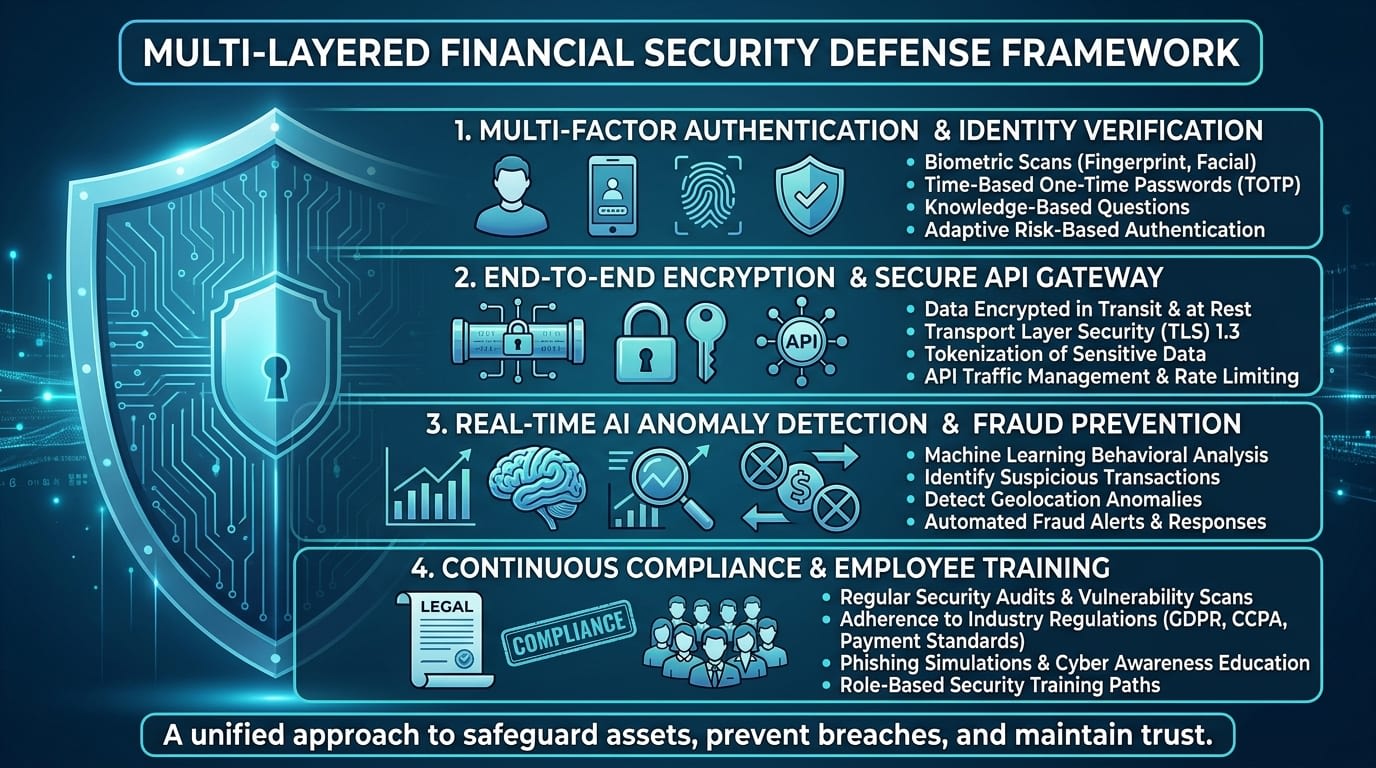
Figure 2: The Four Pillars of Modern Financial Cybersecurity Resilience.
Pillar I: Zero-Trust Identity & Access Management (IAM)
The principle of "Never Trust, Always Verify" is critical for financial platforms. Multi-Factor Authentication (MFA) utilizing hardware tokens or FIDO2 standards prevents the majority of credential-based attacks.
Pillar II: Encryption & Secure API Infrastructure
All financial records and payment packets must be encrypted both in transit (TLS 1.3) and at rest (AES-256). Fine-grained tokenization ensures that sensitive card details (PAN) or personal identifiers (PII) are never exposed directly to internal operational databases.
Pillar III: Real-Time Fraud Detection via Machine Learning
Rules-based systems are no longer sufficient. Machine learning models evaluate behavioral metrics—such as device fingerprinting, velocity checks, and transaction anomalies—in real-time to flag high-risk transfers before execution.
3. Summary Matrix: Security Controls vs. Threat Vectors
Security Layer | Primary Threat Mitigated | Key Technical Standard |
Zero-Trust Architecture | Lateral Network Movement | NIST SP 800-207 |
FIDO2 / Hardware MFA | Credential Stuffing / Phishing | WebAuthn / FIDO Alliance |
Tokenization | Data Exposure & Breach Impact | PCI-DSS 4.0 |
AI Transaction Monitoring | Wire Fraud & Unauthorized Transfers | Real-Time Behavioral Analytics |
4. Actionable Implementation Steps
Conduct Regular Penetration Testing: Perform quarterly red-teaming exercises focused on API vulnerabilities and financial workflow bypasses.
Enforce Strict Third-Party Risk Management (TPRM): Ensure vendor APIs adhere strictly to SOC 2 Type II and PCI-DSS compliance standards.
Cultivate a Security-First Culture: Conduct simulated phishing campaigns targeting financial authorization teams to prevent BEC (Business Email Compromise).
Comments
Be the first to comment.
Leave a Comment